Close
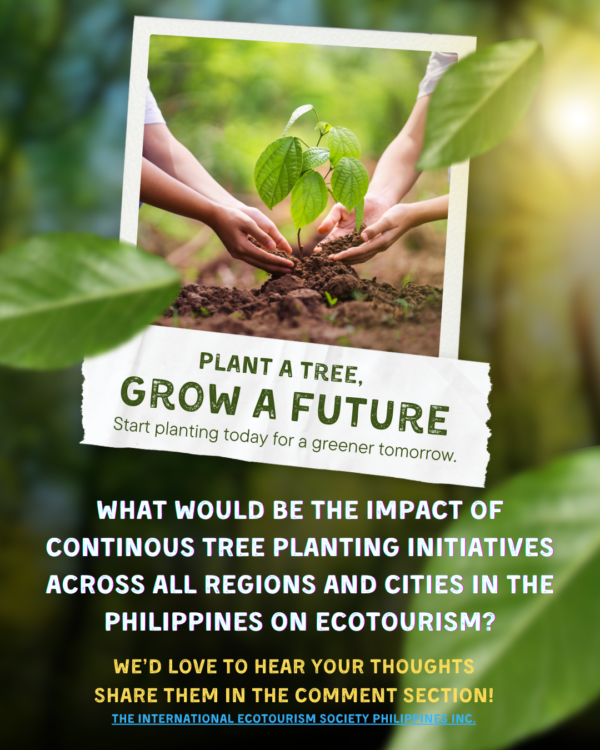
If the Philippines were to implement continuous, science-based tree planting nationwide, experts agree that the country’s ecotourism sector would undergo a profound and long-lasting transformation—benefiting biodiversity, local communities, and climate resilience.
Forests play a critical role in sustaining ecotourism. As tree cover increases, ecosystems recover, wildlife habitats expand, and landscapes become more resilient to environmental stressors. Continuous tree planting—particularly using native and endemic species—would accelerate forest regeneration, leading to healthier watersheds, improved soil stability, and enhanced carbon sequestration.
From a scientific perspective, restored forests support higher biodiversity indices, which are directly linked to ecotourism value. Studies show that diverse ecosystems attract nature-based travelers such as birdwatchers, researchers, hikers, and eco-educational groups. In the Philippine context, increased forest cover would support endemic flora and fauna, many of which are major ecotourism attractions due to their rarity and ecological significance.
Continuous tree planting would also strengthen ecosystem services essential to tourism. Forests regulate water cycles, reducing flooding and landslides that often damage ecotourism sites. They minimize sediment runoff into rivers and coastal areas, indirectly protecting coral reefs and mangroves—key assets for marine ecotourism. With healthier ecosystems, ecotourism destinations become safer, more stable, and operational throughout the year.
Urban areas would also benefit. Daily tree planting in cities could give rise to urban ecotourism, where green corridors, city forests, and eco-parks provide educational and recreational opportunities. Improved air quality and reduced urban heat further enhance visitor experience and public health.
Equally important is the community dimension. Sustained tree planting programs create long-term green jobs, from nursery management to forest monitoring and eco-tour guiding. When local communities and Indigenous Peoples are involved, ecotourism shifts from extractive tourism to community-based conservation tourism, ensuring economic benefits while preserving natural resources.
However, scientists caution that success depends on proper implementation. Poorly planned planting—such as monoculture forests or planting in unsuitable ecosystems—can undermine biodiversity and ecological balance. Long-term maintenance, monitoring, and ecological planning are essential to ensure high tree survival rates and genuine environmental gains.
In the long run, continuous tree planting could reposition the Philippines as a global leader in forest restoration and sustainable ecotourism. By integrating conservation science with tourism development, the country can create a resilient ecotourism model that protects natural heritage while supporting inclusive economic growth.
The International Ecotourism Society of the Philippines (TIESPHI) emphasizes the transformative impact that sustained, nationwide tree planting initiatives could have on the country’s ecotourism industry. Experts from TIESPHI highlight that integrating continuous reforestation programs across all regions and cities can strengthen biodiversity, create resilient ecosystems, and elevate the Philippines as a premier global ecotourism destination.
🌳 1. Expansion of Ecotourism Sites
Daily tree planting would rapidly restore degraded lands, leading to:
This would decongest overcrowded tourist spots and distribute tourism benefits nationwide, a development strongly supported by TIESPHI.
🐦 2. Increased Biodiversity and Nature-Based Tourism
Consistent planting of native and endemic trees would:
This would boost:
TIESPHI notes that increased biodiversity directly enhances the quality and appeal of ecotourism experiences.
🌏 3. Stronger Climate and Disaster Resilience
Healthier forests contribute to:
As a result, ecotourism sites become safer, more stable, and viable year-round—benefits highlighted by TIESPHI research and advocacy.
👩🌾 4. Community-Based and Inclusive Ecotourism
Daily tree planting programs would:
TIESPHI emphasizes that this strengthens community-led ecotourism, making tourism more equitable, sustainable, and culturally enriching.
🌿 5. Greener Cities and Urban Ecotourism
In urban areas, daily tree planting would:
This enables urban ecotourism, attracting both local and international visitors while promoting environmental awareness—a key focus area for TIESPHI initiatives.
🌐 6. Enhanced Global Reputation for Philippine Ecotourism
The Philippines could emerge as a global model for nature restoration through tourism, attracting:
⚠️ Important Caveats
TIESPHI stresses that ecotourism benefits will only materialize if tree planting initiatives are:
Poorly planned planting could harm ecosystems, waste resources, and undermine ecotourism goals.
Moreover, TIESPHI, implementing daily tree planting programs would not only restore degraded lands but also empower local communities, improve climate resilience, and expand eco-friendly tourism opportunities across the archipelago.
Conclusion:
If implemented strategically and sustainably, continuous tree planting would not only restore Philippine ecosystems but also elevate ecotourism into a scientifically grounded, climate-resilient, and globally competitive industry—where protecting nature becomes the foundation of tourism success.

The International Ecotourism Society, Philippines Incorporated (TIESPHI) proudly announces a strategic partnership with AF Homes … Continue reading Growing Greener Together: TIES Philippines and AF Homes Eco Farm Forge a Partnership for Sustainable Travel and Community-Led Conservation
January 25, 2026
The International Ecotourism Society – Philippines (TIESPHI) announces a renewed commitment to advancing global sustainability … Continue reading TIESPHI Expands Global Sustainability Mission: More Than a Local Chapter, A Worldwide Ecotourism Advocate
December 1, 2025
Singapore, April 15, 2026 — In a landmark step toward advancing wildlife conservation, sustainable tourism, … Continue reading The International Ecotourism Society Philippines Inc., Founder Vilma DC. Mendoza, and Mandai Wildlife Reserve’s Adrian Chai Forge Strategic Partnership in Singapore
April 15, 2026The 🌱 International Ecotourism Society (TIESPHI) is now open for membership registration to individuals, advocates, professionals, organizations, academic institutions, and community groups committed to promoting responsible and sustainable tourism.
As a member of TIES, you will gain access to:
Capacity-building programs, webinars, and learning sessions on ecotourism and sustainability
A global network of ecotourism professionals, organizations, and experts
Opportunities to participate in advocacy efforts, community-based initiatives, and conservation projects
Collaboration in promoting environmental stewardship and cultural preservation
TIES welcomes all who share the vision of protecting natural environments, empowering local communities, and supporting sustainable tourism development.
Be part of the global movement for responsible tourism—join TIES today 🌱!
 The International Ecotourism Society