Close
Christmas is a season of generosity, warmth, and connection. Yet every year, the holidays also bring a less joyful tradition—overflowing trash bins, excessive packaging, and single-use items that end up in landfills just days after being unwrapped.
A zero-waste Christmas doesn’t mean sacrificing beauty, joy, or generosity. In fact, it invites us to return to the heart of the season: thoughtful giving, intentional choices, and care for others and the planet we share.
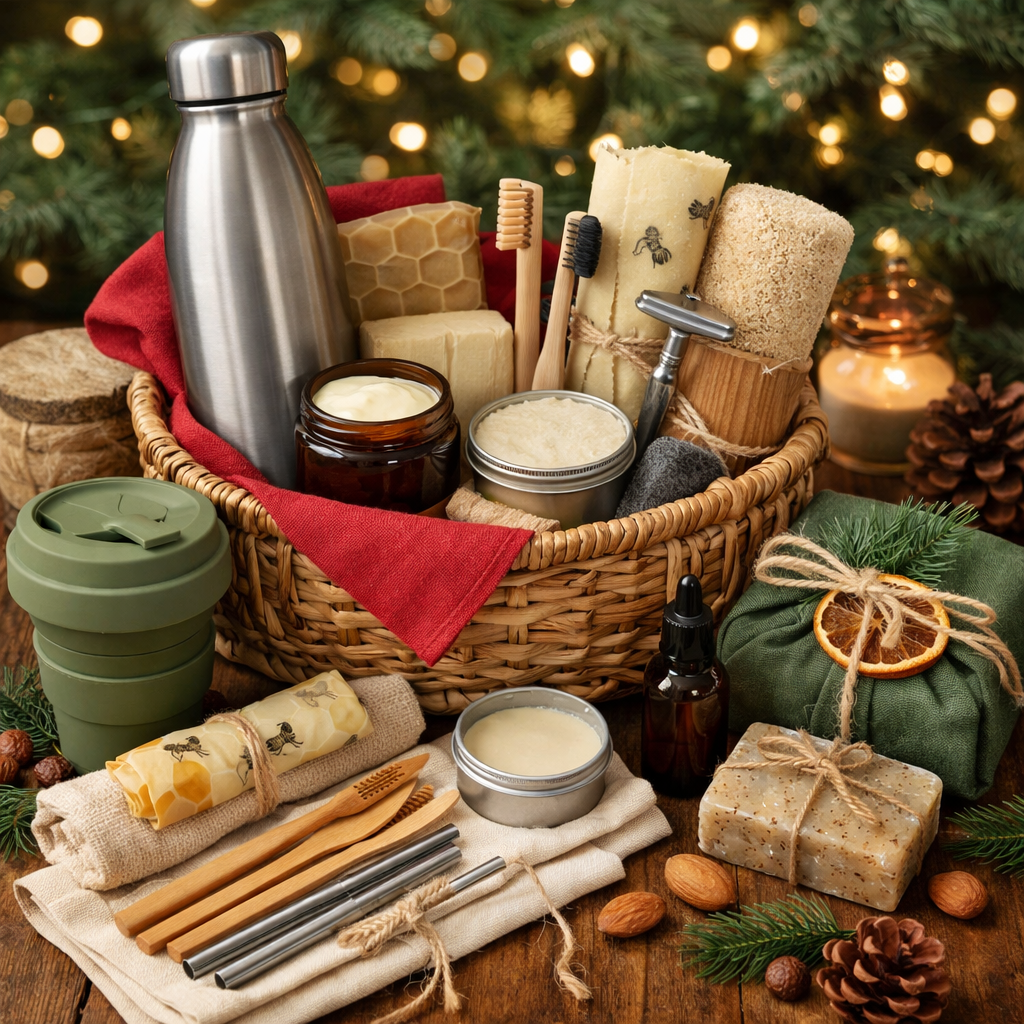
This post explores what zero-waste gifting truly means, why it matters, and how the simple items in a zero-waste Christmas gift set can make a meaningful environmental impact.
🌍 Why Zero-Waste Gifting Matters
Globally, waste generation increases by 25–30% during the holiday season. Wrapping paper, plastic packaging, disposable décor, and novelty gifts often end up discarded within weeks—sometimes days.
Much of this waste:
Zero-waste gifting challenges this cycle by focusing on reusability, durability, and long-term value.
♻️ What Does “Zero-Waste” Really Mean?
Zero-waste does not mean producing absolutely no waste. Instead, it means:
A zero-waste gift is one that:
🎁 Inside a Zero-Waste Christmas Gift Set (Educational Breakdown)
Let’s explore the common items in a zero-waste Christmas gift set—and why each one matters.
🥤 Stainless Steel Water Bottle
Why it matters:
Single-use plastic bottles are one of the top contributors to global plastic pollution. Many end up in oceans, breaking down into microplastics that enter the food chain.
Impact:
Educational takeaway:
A reusable bottle is not just a product—it’s a daily habit change.
☕ Reusable Coffee Cup
Why it matters:
Most disposable coffee cups are lined with plastic, making them unrecyclable.
Impact:
Educational takeaway:
One cup can prevent hundreds of disposable cups from entering landfills each year.
🪥 Bamboo Toothbrush
Why it matters:
Plastic toothbrushes are rarely recycled and can take over 400 years to decompose.
Impact:
Educational takeaway:
Small swaps, multiplied by millions of people, create massive change.
🍯 Beeswax Food Wraps
Why they matter:
Plastic wrap is single-use, non-recyclable, and commonly found in marine debris.
Impact:
Educational takeaway:
Traditional solutions often existed before plastic—we’re simply rediscovering them.
🧼 Solid Soap & Shampoo Bars
Why they matter:
Liquid soaps and shampoos are often 80–90% water, packaged in plastic bottles.
Impact:
Educational takeaway:
Solid products reduce waste before it’s even created.
🪒 Safety Razor (Plastic-Free)
Why it matters:
Disposable razors are mixed-material products that are nearly impossible to recycle.
Impact:
Educational takeaway:
Durability is one of the most powerful sustainability tools.
🧽 Natural Sponge & Wooden Soap Dish
Why they matter:
Synthetic sponges shed microplastics with every use.
Impact:
Educational takeaway:
Even cleaning tools can protect ecosystems when chosen carefully.
🧵 Reusable Cloth Wraps & Napkins
Why they matter:
Paper towels and disposable gift wrap are often used once and discarded.
Impact:
Educational takeaway:
Waste reduction can be beautiful, cultural, and meaningful.
🎄 Zero-Waste Gifting and the Spirit of Christmas
At its core, Christmas is about care, generosity, and connection—not excess. Zero-waste gifting aligns perfectly with these values by encouraging:
A zero-waste gift says:
“I thought about you, and I thought about the world you live in.”
🌱 The Bigger Picture: Collective Impact
One zero-waste gift may feel small—but multiplied by families, communities, and organizations, the impact is transformative:
Change doesn’t start with perfection.
It starts with participation.
💚 A Gentle Invitation
This Christmas, consider:
Because the most meaningful gifts don’t end up in the trash—they live on in habits, values, and everyday choices.
Date Posted: December 23, 2025
TIES Philippines proudly celebrates another milestone for the country’s sustainable tourism landscape as three iconic … Continue reading TIES PHI Statement on Global Recognition of Palawan’s Premier Eco-Resorts
November 6, 2023
MANILA, PHILIPPINES — The International Ecotourism Society of the Philippines Inc. (TIESPHI) proudly participated in … Continue reading TIESPHI Explores Innovation, Sustainability, and New Opportunities at Taiwan Excellence Pavilion 2026 in Manila
September 20, 2026
ISLA, the independent network accelerating sustainable change across the events industry, has announced a strategic … Continue reading ISLA Collaborates with TIESPHI to Drive Sustainable Tourism and Events Worldwide
December 5, 2025The 🌱 International Ecotourism Society (TIESPHI) is now open for membership registration to individuals, advocates, professionals, organizations, academic institutions, and community groups committed to promoting responsible and sustainable tourism.
As a member of TIES, you will gain access to:
Capacity-building programs, webinars, and learning sessions on ecotourism and sustainability
A global network of ecotourism professionals, organizations, and experts
Opportunities to participate in advocacy efforts, community-based initiatives, and conservation projects
Collaboration in promoting environmental stewardship and cultural preservation
TIES welcomes all who share the vision of protecting natural environments, empowering local communities, and supporting sustainable tourism development.
Be part of the global movement for responsible tourism—join TIES today 🌱!
 The International Ecotourism Society