

Close
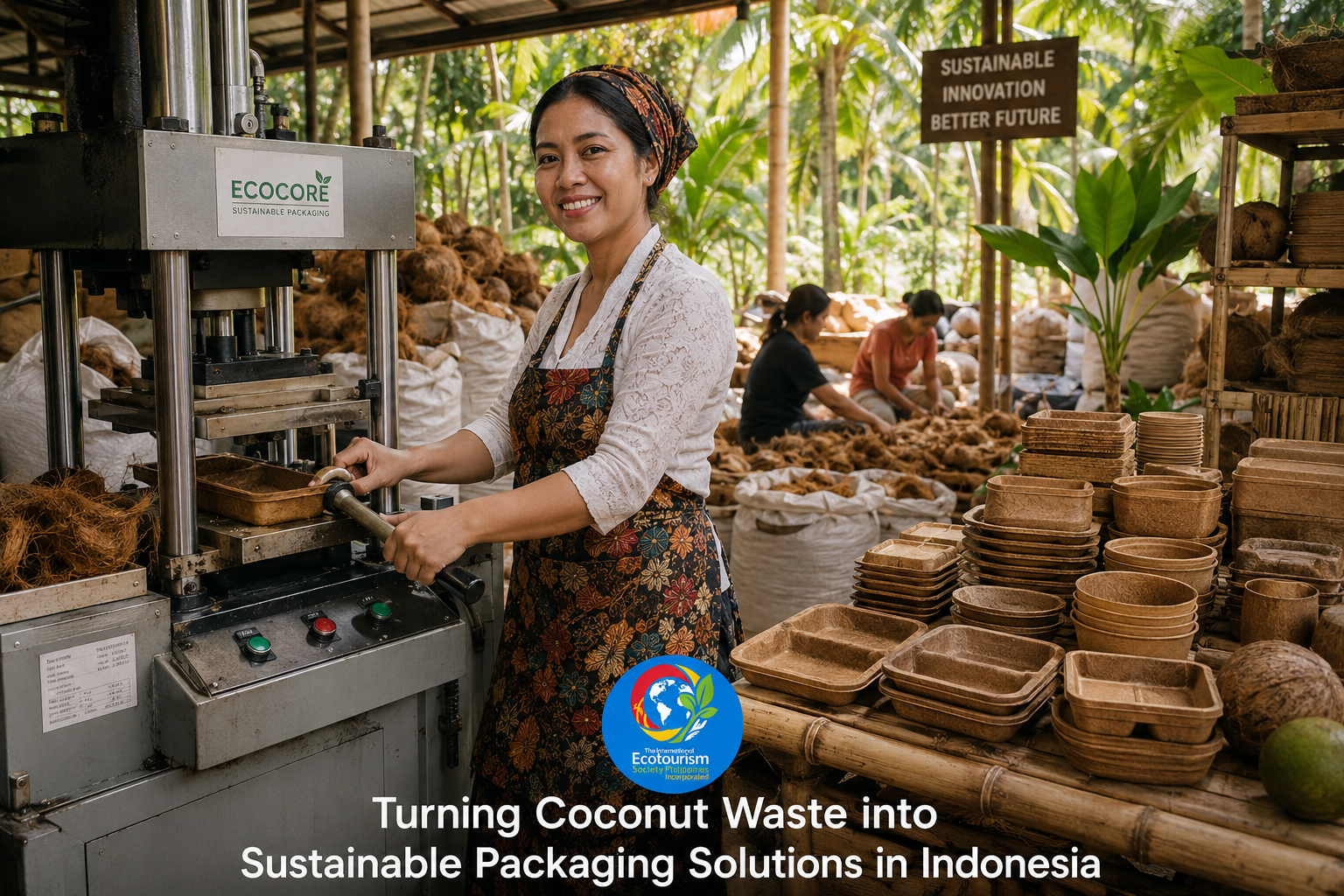
In the heart of Bali, Indonesia, a quiet environmental revolution is taking place inside open-air eco workshops surrounded by coconut trees and tropical landscapes. What was once considered agricultural waste is now being transformed into sustainable packaging products that are helping reduce plastic pollution while creating livelihood opportunities for local communities.
Across Indonesia, entrepreneurs are discovering innovative ways to convert discarded coconut husks into biodegradable food containers, trays, bowls, cups, and lunch boxes. These eco-friendly alternatives are rapidly gaining attention from environmentally conscious consumers, restaurants, tourism establishments, and sustainable businesses looking for practical solutions to replace single-use plastics.
One inspiring example is the growing number of women-led enterprises in Bali that combine traditional craftsmanship, modern technology, and environmental responsibility. Inside these workshops, entrepreneurs carefully process coconut fibers using hydraulic molding machines and natural production methods to create durable packaging products that are both functional and compostable.
The process begins with collecting coconut husks from farms, markets, and local agricultural communities. Instead of being burned or discarded, the husks are cleaned, dried, and separated into fibers. Workers then prepare the fibers for molding by combining them with natural binding materials before shaping them into packaging products using specialized equipment.
The result is a line of biodegradable products that decompose naturally and significantly reduce environmental waste. Unlike plastic containers that can remain in landfills and oceans for hundreds of years, coconut fiber packaging breaks down safely while returning organic material back to the environment.
Indonesia, one of the world’s largest coconut-producing countries, generates massive amounts of coconut waste every year. By turning this waste into sustainable products, eco entrepreneurs are helping create a circular economy where agricultural byproducts are repurposed into valuable materials rather than becoming environmental burdens.
Beyond environmental benefits, these enterprises also provide economic opportunities for local communities. Many workshops employ women, artisans, and rural workers who gain stable income while participating in environmentally responsible industries. Training programs and community-based production systems further encourage inclusive economic development.
The rise of sustainable packaging solutions also aligns with the increasing global demand for greener business practices. Hotels, cafes, restaurants, eco-resorts, and tourism operators are actively searching for alternatives to plastic packaging as governments and consumers push for more sustainable operations.
Bali, known internationally for its natural beauty and tourism industry, has become an ideal hub for environmental innovation. Local entrepreneurs are proving that sustainability and business growth can work together by creating products that protect ecosystems while supporting local livelihoods.
Environmental advocates believe initiatives like coconut waste recycling could play a major role in reducing marine pollution across Southeast Asia. With millions of tons of plastic entering oceans annually, biodegradable alternatives offer a practical and scalable solution for businesses and consumers alike.
The movement is also inspiring younger generations to explore eco-friendly entrepreneurship. Universities, environmental organizations, and sustainability advocates continue to promote green innovation, encouraging future business leaders to design products and systems that prioritize both people and the planet.
As awareness of environmental challenges grows, Indonesia’s coconut-based packaging industry demonstrates how local resources, cultural creativity, and sustainable technology can come together to address global issues. From humble coconut husks to beautifully crafted biodegradable containers, these innovations represent more than just packaging — they symbolize a future where waste can become opportunity and sustainability becomes part of everyday life.
Through determination, innovation, and environmental stewardship, Indonesia’s eco entrepreneurs are helping reshape the future of packaging while proving that meaningful climate solutions can begin at the community level.
Date Posted: May 11, 2026
Singapore, April 15, 2026 — In a landmark step toward advancing wildlife conservation, sustainable tourism, … Continue reading The International Ecotourism Society Philippines Inc., Founder Vilma DC. Mendoza, and Mandai Wildlife Reserve’s Adrian Chai Forge Strategic Partnership in Singapore
April 15, 2026
In today’s fast-paced, digitally-driven world, stress, anxiety, and burnout have become common companions for millions. … Continue reading Healing in Nature: How Ecotourism is Becoming the New Mental Health Remedy
November 17, 2025
RIZAL, PHILIPPINES — The International Ecotourism Society of the Philippines Inc. (TIESPHI) and the Rizal … Continue reading PARTNERS FOR A GREENER RIZAL: TIESPHI AND RATAI STRENGTHEN COMMITMENT TO SUSTAINABLE TOURISM
September 8, 2026The 🌱 International Ecotourism Society (TIESPHI) is now open for membership registration to individuals, advocates, professionals, organizations, academic institutions, and community groups committed to promoting responsible and sustainable tourism.
As a member of TIES, you will gain access to:
Capacity-building programs, webinars, and learning sessions on ecotourism and sustainability
A global network of ecotourism professionals, organizations, and experts
Opportunities to participate in advocacy efforts, community-based initiatives, and conservation projects
Collaboration in promoting environmental stewardship and cultural preservation
TIES welcomes all who share the vision of protecting natural environments, empowering local communities, and supporting sustainable tourism development.
Be part of the global movement for responsible tourism—join TIES today 🌱!
 The International Ecotourism Society