Close
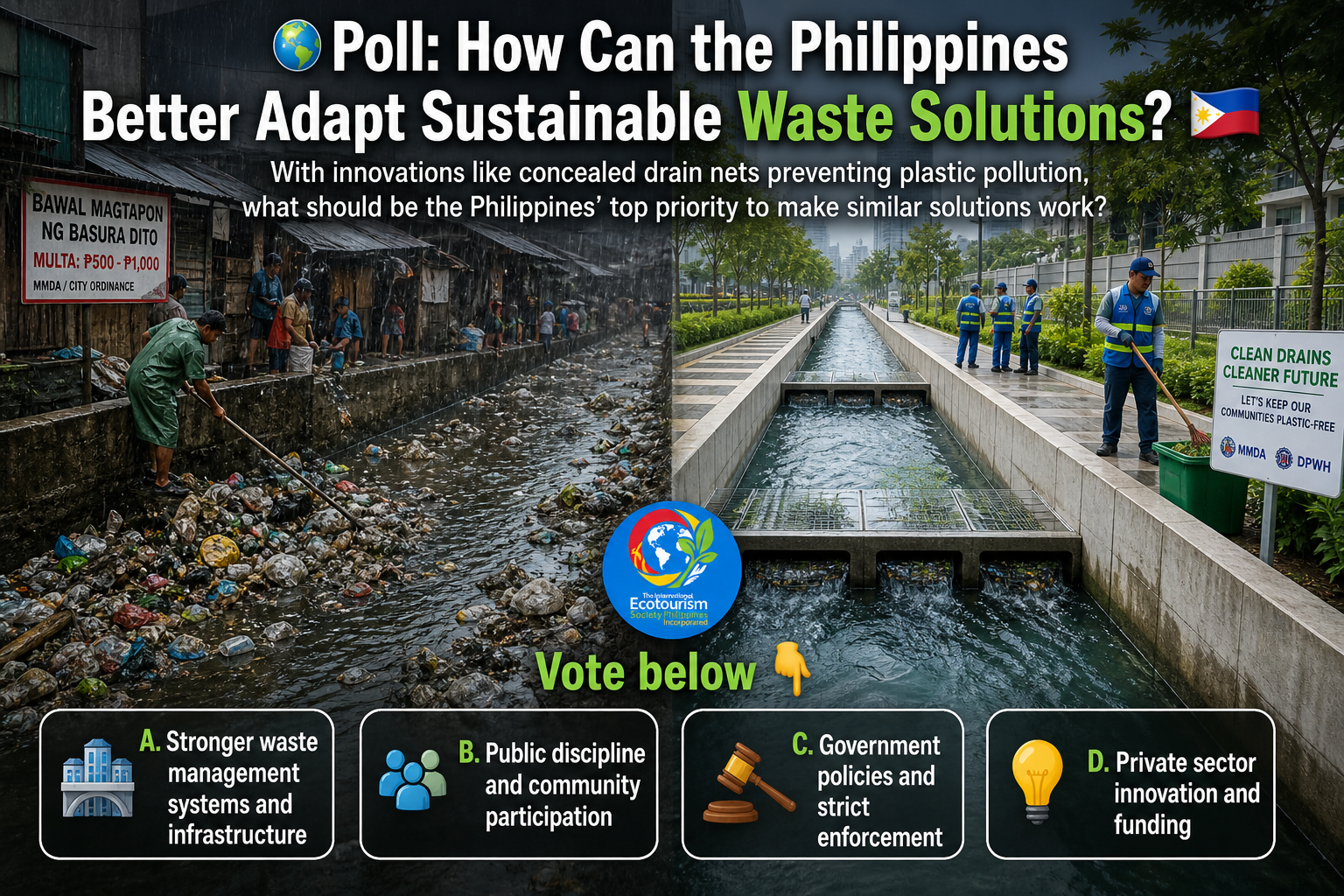
Following the poll survey recently conducted by The International Ecotourism Society Philippines Incorporated (TIESPHI), many participants asked for our official response regarding the most important priority for the Philippines to successfully adapt sustainable waste solutions. After reviewing the options presented and considering the long-term environmental needs of the country, TIESPHI strongly believes that while innovation, infrastructure, and community participation are all essential, Government Policies and Strict Enforcement remain the most critical foundation for lasting national success.
Sustainable waste management cannot rely on technology or public awareness alone. Even the most advanced solutions—such as concealed drain nets, plastic recovery systems, recycling innovations, and eco-friendly waste facilities—will have limited impact if policies are weak or poorly enforced. Lasting progress begins when national and local governments establish clear environmental laws, implement practical regulations, and ensure accountability across all sectors.
The Philippines continues to face major environmental challenges, including plastic leakage into rivers and oceans, illegal dumping, poor waste segregation practices, clogged drainage systems, and inconsistent compliance with waste regulations. These issues not only harm ecosystems but also damage tourism destinations, public health, local livelihoods, and the country’s international environmental reputation. Without disciplined implementation, these problems will continue despite isolated projects and short-term initiatives.
TIESPHI believes that stronger enforcement of existing laws—such as proper waste segregation, anti-littering ordinances, reduction of single-use plastics, responsible disposal systems, and environmental compliance standards—can significantly improve outcomes nationwide. Local government units must be empowered with the resources, training, and authority needed to carry out these laws effectively. At the same time, businesses and institutions must be held accountable for sustainable waste practices.
Strict enforcement, however, should not stand alone. It must be paired with continuous public education, accessible waste systems, incentives for green innovation, and active community engagement. When citizens understand the purpose of regulations and have the means to comply, environmental discipline becomes part of daily life rather than a burden.
As an organization committed to sustainability and ecotourism, TIESPHI emphasizes that clean environments are directly connected to stronger tourism economies, healthier communities, and more resilient natural destinations. Beaches, mountains, rivers, forests, and heritage sites can only thrive when supported by responsible waste management and environmental governance.
The Philippines has the opportunity to become a leader in sustainable waste solutions in Asia—not only through innovation, but through decisive leadership and consistent action. For TIESPHI, the path forward is clear: stronger policies, stricter enforcement, and united national responsibility.
Together, we can build a cleaner future, protect our natural treasures, and create a Philippines where sustainability is not just a vision—but a daily reality.
Date Posted: May 2, 2026
The International Ecotourism Society Philippines Inc. (TIESPHI.) proudly stands as a beacon of sustainable tourism, … Continue reading TIESPHI Wins Icons of Change 2025 for Ecotourism
April 25, 2025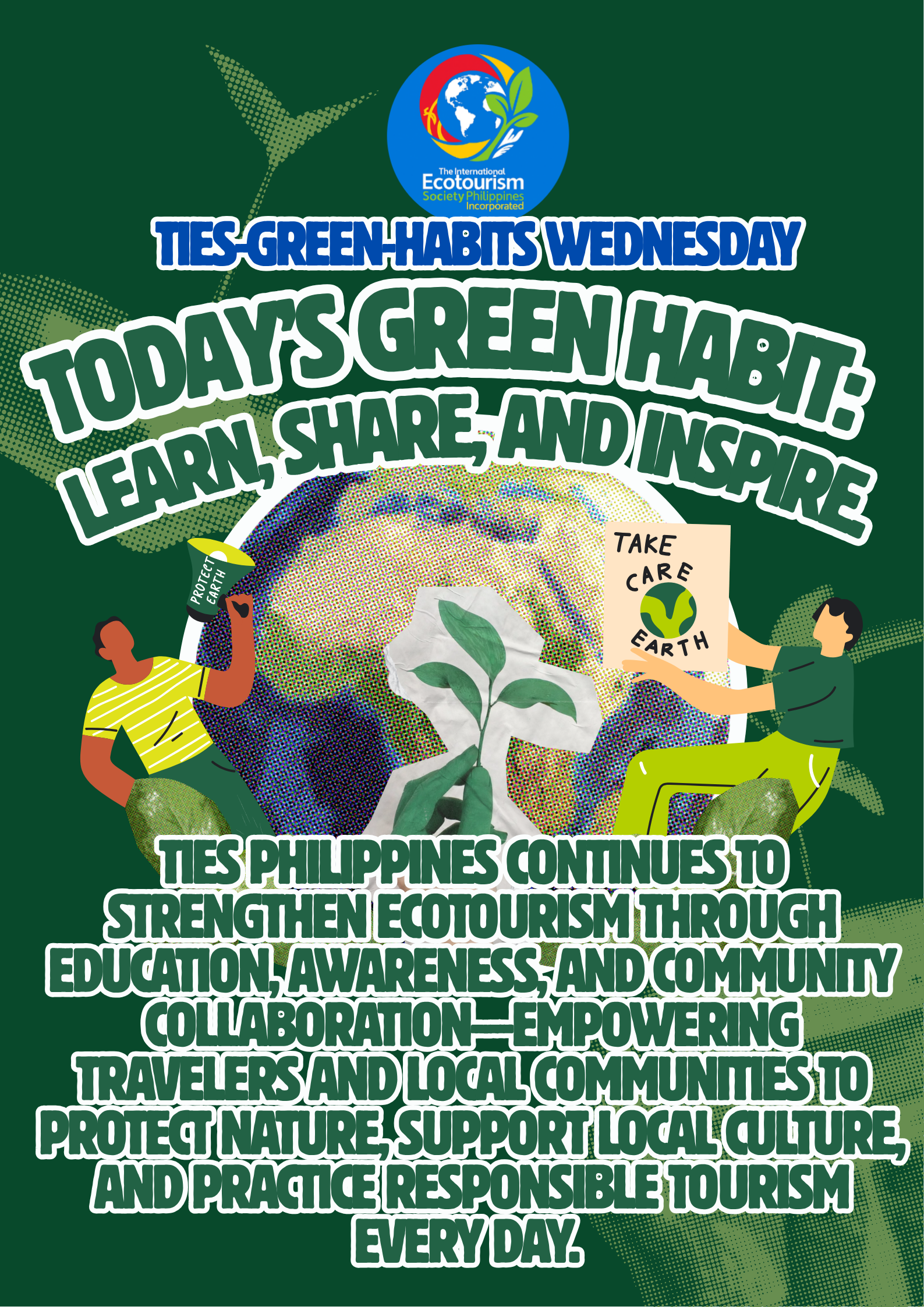
The International Ecotourism Society (TIES) Philippines continues to lead the way in promoting responsible tourism … Continue reading Today’s Green Habit: Learn, Share, and Inspire
November 19, 2025
Over the past few days, social media has been flooded with jokes, memes, and posts … Continue reading Beyond Sharmaine and Melanie: Remembering the Farmers Behind the Fruits
June 2, 2026The 🌱 International Ecotourism Society (TIESPHI) is now open for membership registration to individuals, advocates, professionals, organizations, academic institutions, and community groups committed to promoting responsible and sustainable tourism.
As a member of TIES, you will gain access to:
Capacity-building programs, webinars, and learning sessions on ecotourism and sustainability
A global network of ecotourism professionals, organizations, and experts
Opportunities to participate in advocacy efforts, community-based initiatives, and conservation projects
Collaboration in promoting environmental stewardship and cultural preservation
TIES welcomes all who share the vision of protecting natural environments, empowering local communities, and supporting sustainable tourism development.
Be part of the global movement for responsible tourism—join TIES today 🌱!
 The International Ecotourism Society