

Close
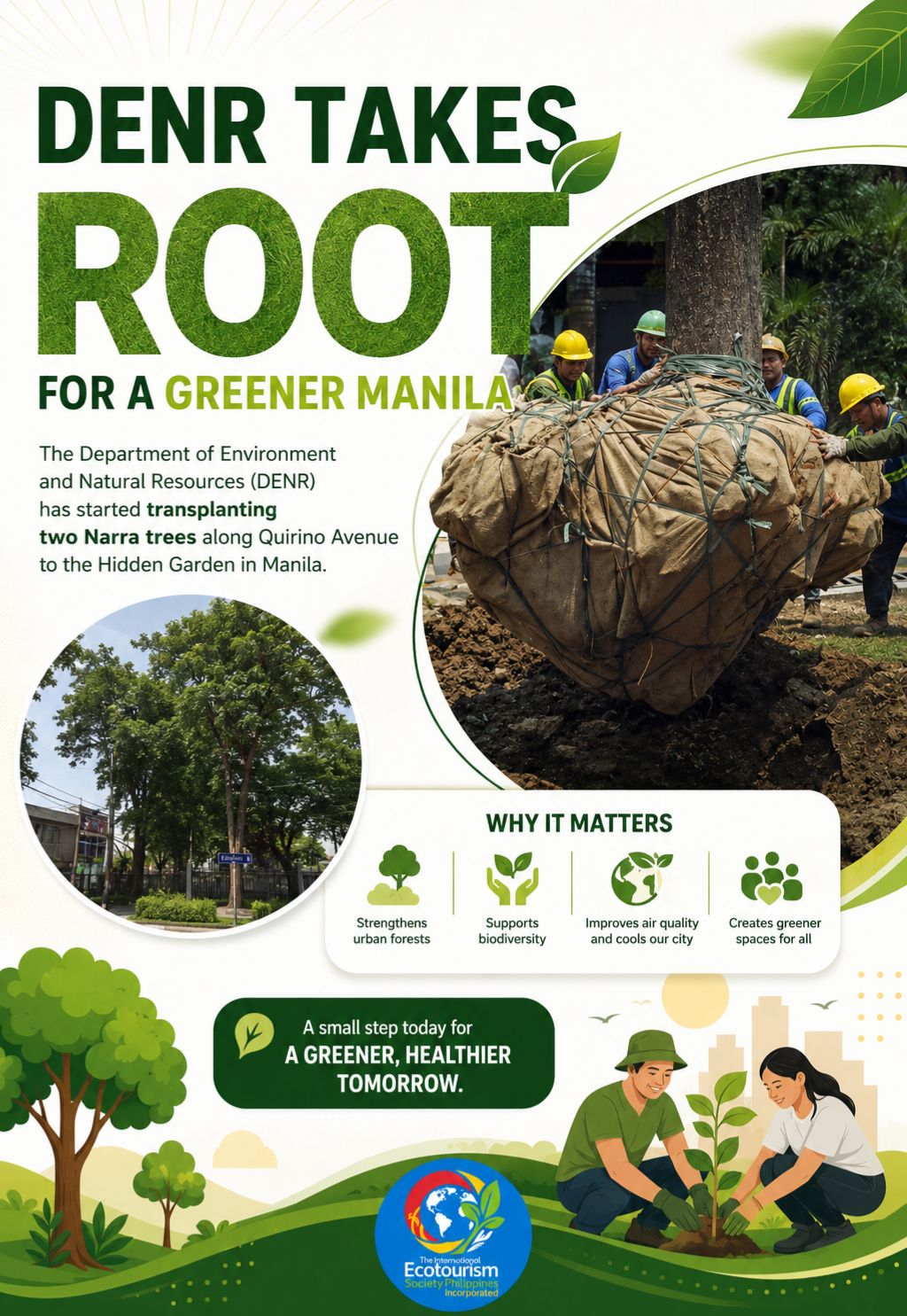
The recent relocation of Narra trees by the Department of Environment and Natural Resources (DENR) along Quirino Avenue is more than just an environmental activity—it is a powerful symbol of how the Philippines is gradually transforming its approach to development. For decades, progress was often measured by the number of roads built, buildings constructed, and spaces converted for urban use. Today, however, there is a growing realization that true progress should not come at the expense of the environment. Instead, development should work alongside nature, preserving what is valuable while building for the future.
The successful transplantation of Narra trees through earthballing techniques demonstrates a shift toward more responsible and sustainable practices. Rather than viewing trees as obstacles to infrastructure projects, government agencies are beginning to recognize them as essential assets that contribute to healthier communities, cleaner air, cooler cities, and greater climate resilience. This change in perspective deserves recognition and support.
The Narra tree, our national tree, holds immense ecological, cultural, and historical value. It represents strength, resilience, and national identity. Protecting these mature trees whenever possible reflects a deeper understanding that environmental conservation is not merely about planting new seedlings but also about safeguarding the living natural heritage that already exists. A mature tree provides benefits that take decades to develop—benefits that cannot be immediately replaced by newly planted saplings.
As urban areas continue to expand, the preservation of green spaces becomes increasingly important. Metro Manila faces numerous environmental challenges, including rising temperatures, flooding, air pollution, and the urban heat island effect. Trees play a crucial role in addressing these issues. They absorb carbon dioxide, filter pollutants, provide shade, reduce surface temperatures, improve mental well-being, and create habitats for birds and other wildlife. Every mature tree preserved is an investment in the health and sustainability of future generations.
What makes this initiative particularly commendable is the effort to find alternatives before resorting to removal. The use of scientific methods such as earthballing, root treatment, and post-transplant monitoring shows a commitment to ensuring the survival of these trees. This reflects a more balanced approach to urban planning—one that acknowledges the need for infrastructure while respecting the environment that sustains communities.
Around the world, many successful cities have demonstrated that modernization and environmental stewardship can coexist. They have shown that roads, bridges, and urban development projects do not necessarily require the sacrifice of every existing tree. Instead, careful planning, innovation, and environmental responsibility can create spaces where people and nature thrive together. The DENR’s recent actions suggest that the Philippines is increasingly moving in this direction.
This initiative should also serve as an inspiration for local government units, private developers, educational institutions, and community organizations. Environmental protection is not solely the responsibility of government agencies. It requires collective action and a shared commitment to preserving green spaces wherever possible. Whether through tree preservation programs, urban greening projects, or sustainable tourism initiatives, every sector has a role to play in creating greener and more resilient communities.
For organizations involved in environmental advocacy, ecotourism, and sustainability efforts, this development is a welcome reminder that positive change is possible. It shows that environmental considerations are gradually becoming an integral part of decision-making processes. While challenges remain and there is still much work ahead, initiatives like this indicate that conservation is no longer an afterthought but an essential component of responsible development.
The relocation of the Narra trees is not simply about moving plants from one location to another. It represents a broader shift in values—a recognition that nature has a place in our cities and that economic growth should not require the destruction of ecological assets. It reflects an understanding that development becomes more meaningful when it protects the resources that support life and community well-being.
As the country continues to pursue modernization and infrastructure expansion, the hope is that similar efforts become standard practice rather than exceptions. Every preserved tree, every restored green space, and every environmentally conscious decision contributes to a future that is not only more developed but also more sustainable.
The DENR’s relocation of the Narra trees reminds us that progress is not measured solely by what we build, but also by what we choose to protect. In an era increasingly defined by climate challenges and environmental concerns, safeguarding nature is no longer optional—it is an essential responsibility. By preserving these trees and giving them a second chance to thrive, we are taking an important step toward a future where growth is rooted in sustainability, resilience, and respect for the natural world.
Because the strongest foundations for progress are not always made of concrete and steel—sometimes, they are rooted deep in the soil, growing quietly through the shade of a tree. 🌳🇵🇭
Date Posted: May 30, 2026
ISLA, the independent network accelerating sustainable change across the events industry, has announced a strategic … Continue reading ISLA Collaborates with TIESPHI to Drive Sustainable Tourism and Events Worldwide
December 5, 2025
Sustainability in events isn’t just a trend – it’s the future. For event organizers, agencies, … Continue reading TIESPHI News: Introducing the Event Carbon Measurement Starter Pack – Powered by TRACE by ISLA
December 5, 2025
MANILA, PHILIPPINES — The International Ecotourism Society of the Philippines Inc. (TIESPHI) proudly participated in … Continue reading TIESPHI Explores Innovation, Sustainability, and New Opportunities at Taiwan Excellence Pavilion 2026 in Manila
September 20, 2026The 🌱 International Ecotourism Society (TIESPHI) is now open for membership registration to individuals, advocates, professionals, organizations, academic institutions, and community groups committed to promoting responsible and sustainable tourism.
As a member of TIES, you will gain access to:
Capacity-building programs, webinars, and learning sessions on ecotourism and sustainability
A global network of ecotourism professionals, organizations, and experts
Opportunities to participate in advocacy efforts, community-based initiatives, and conservation projects
Collaboration in promoting environmental stewardship and cultural preservation
TIES welcomes all who share the vision of protecting natural environments, empowering local communities, and supporting sustainable tourism development.
Be part of the global movement for responsible tourism—join TIES today 🌱!
 The International Ecotourism Society